An Evening with The Fawn of Guanima
Bard MFA Thesis Project
The Massena Campus of Bard College
July 11 2026 - July 19 2026
This body of work is a story/tale of folkloric Caribbean nonfiction, recounting my evening with the Fawn of Guanima, our distant cousin — the daughter of Trauma and Grief, a trickster and a proposition.
Fawn is the embodiment of a gentleness that refuses to be submissive. At first, I thought Fawn to be the metaphor for the trauma response of fawning. Coined by Psychotherapist Pete Walker, fawning is described as a response to a threat where a person attempts to be more appealing to the threat in the hopes of neutralizing/preventing escalated violence. Fawning appears on the micro and macro of society – in any and all oppressive relational dynamics. Fawning behavior is so all-encompassing that, over time, it can be misinterpreted as a character trait rather than a tool for surviving systems of oppression. But Fawn is something else more.
Fawning is a response, while Fawn is autonomous. Fawn is both, me, and a part of me, and Fawn’s form is rooted in Caribbean humanist theories of (re)construction. When I/you/we embody this practice of (re)creation, I explore what it means to have nuanced engagement with a non-self self that simultaneously catalyzes my internal sense of turmoil while ensuring my survival. Fawning shifts to Fawn, when our understanding of the mythopoetics that shape whiteness are used as a tool rather than taken as ontological fact of who/what we should be. When we stop conflating observable behaviours as concretely defined and markers of totalized personhoods, we create a space in which we can freely engage with ourselves wholly: fluidly and void of shame. It’s in the dismantling of binary frameworks of definition, that we can establish what it truly means to be human — un-fixed, and multiplicitous, and thus create systems that foster a truly inclusive humanity (Wynter; Jackson).
My engagement with Fawn is just another life’s work and artistic practice. My cousin Nat once told me that I was a person who’s “dedicated to The Small Place” (Kincaid) —and she is not wrong. Who I am and what I do is shaped by my love of home, The Bahamas, The Caribbean. A region rich in communal resilience and an innate demand for its sovereignty. Alan Dundes defines folklore as “autobiographical ethnography— that is, it is a people’s own description of themselves”, and he viewed folklore as a vital educational tool. My work gets to the root of folkloric practices. At its core, folklore is a pedagogical framework rooted in accessibility and human connection. This project adds to my ongoing humanist anthology by recounting my initial interaction with Fawn; an account told in real-time, of what it looks like to engage with Fawn. In years to come, it will be a memoiristic guidebook on how we use the ways of Fawn (gentleness, love, trickery, and storytelling) as tools for our liberation and self-formation.
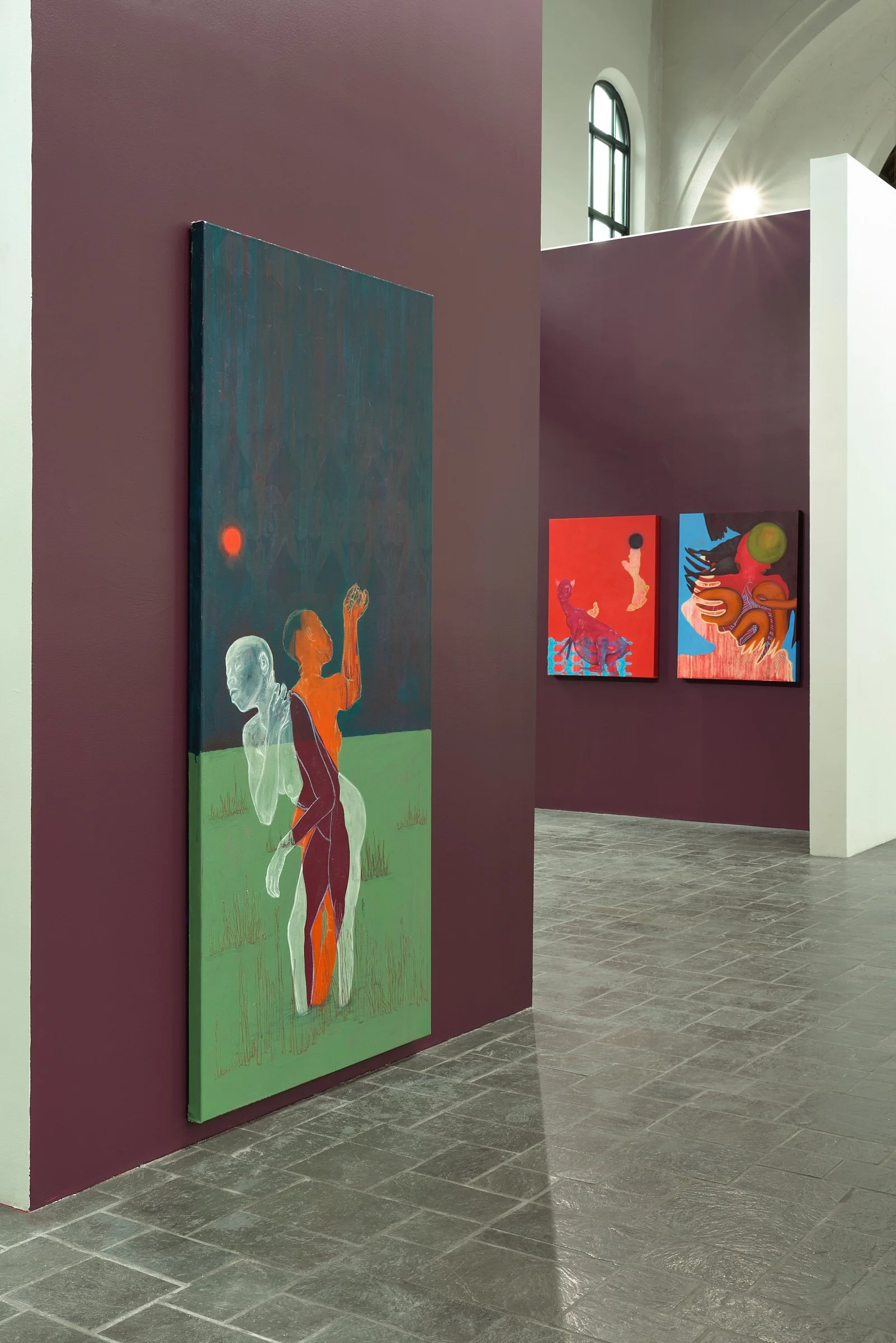
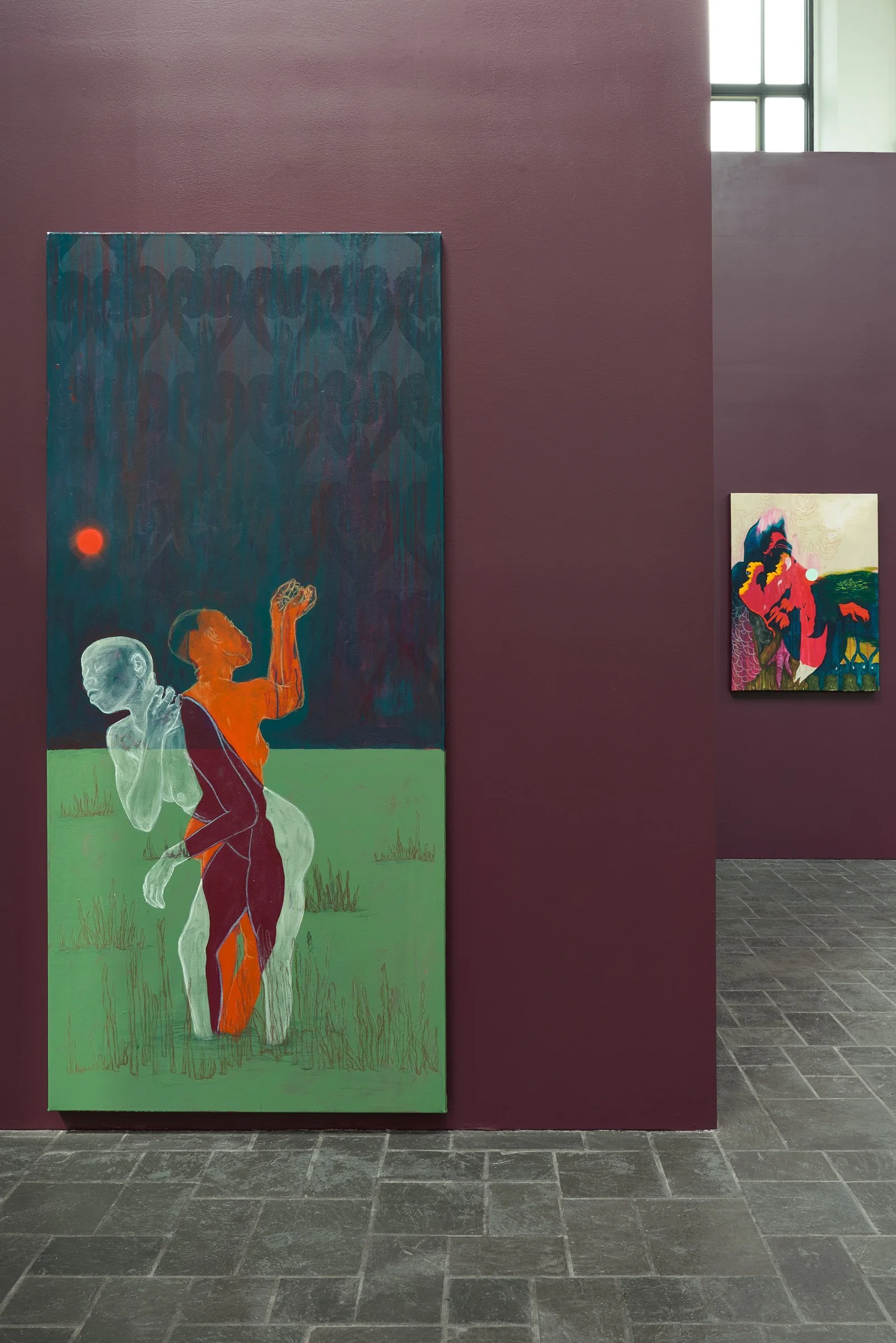
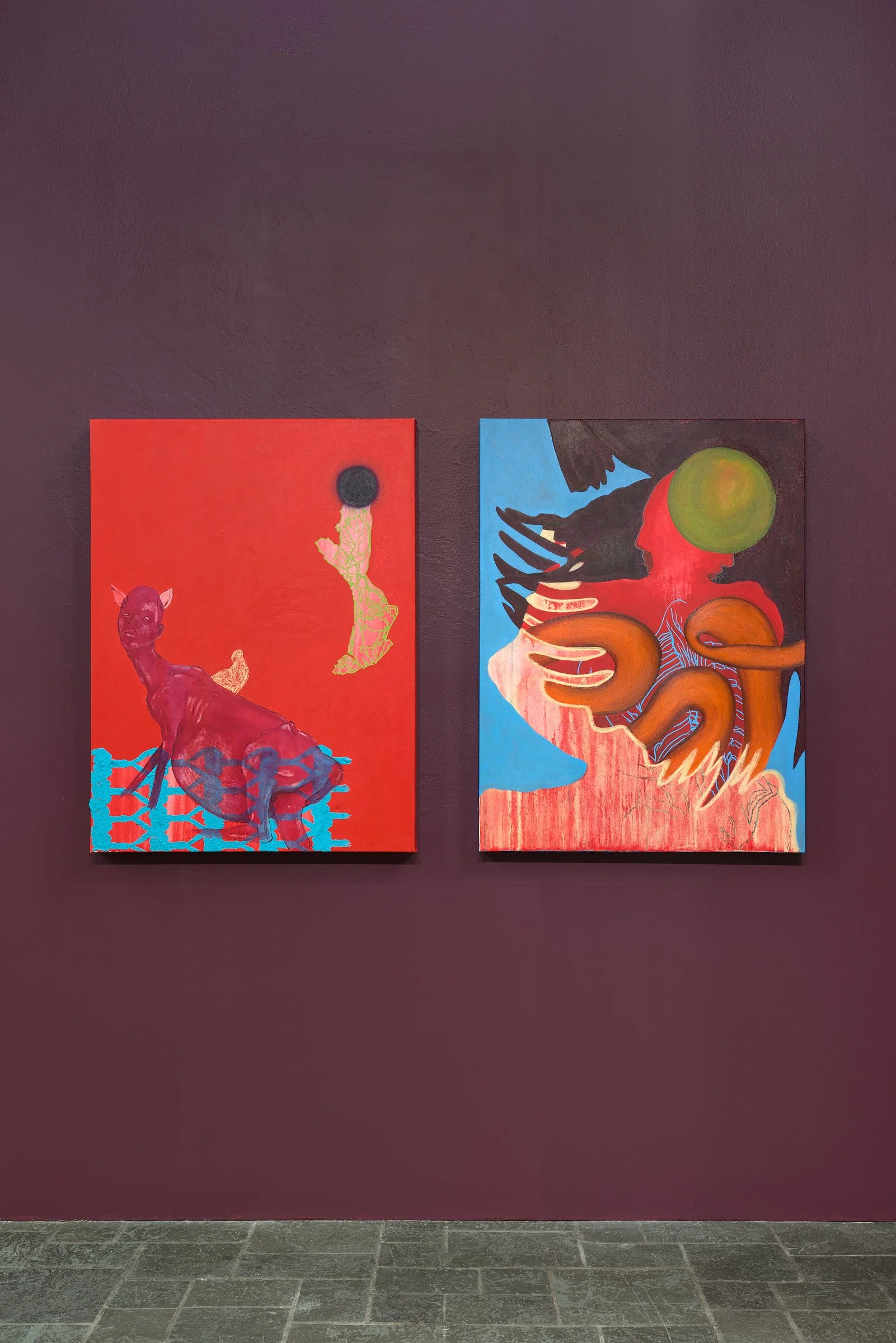
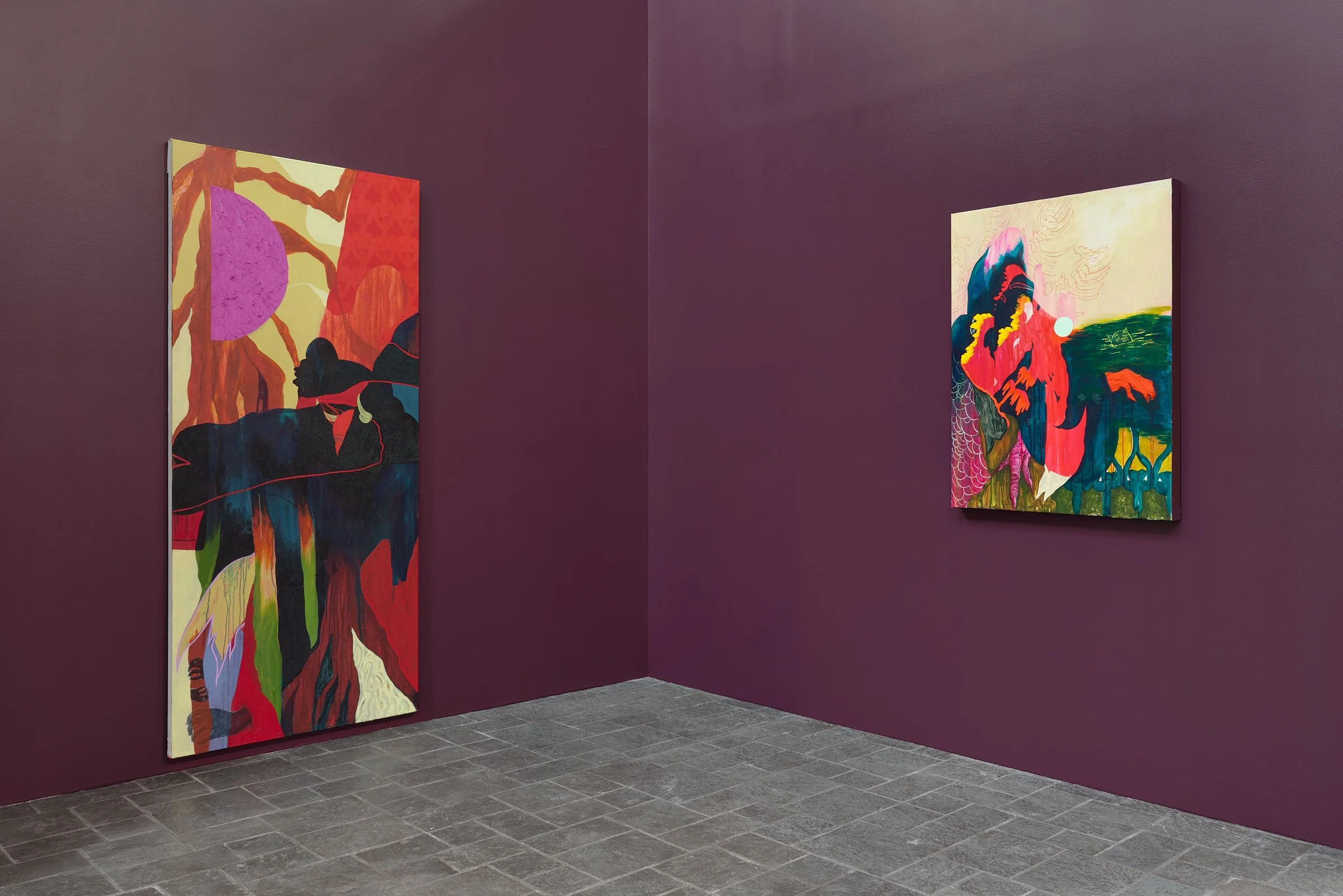
Throughout this series, you will see Fawn in various forms. At times, Fawn will be an amalgamation of recognisable beings— human, animal, and plant; other times, she will be patterns made from a repeated mark of backbent contortionists flipped and twisted to form a shape similar to a Sankofa heart; she may be a texture, a colour, or even a form in flux— masking, shifting, blending, oozing, fading, and opaquing.
Fawn is situated in Guanima, a place and time where the evening blends into night, into morning, and back again. It is a place that thrives on vibrancy, where colour is symbolic, and play is a way of life.
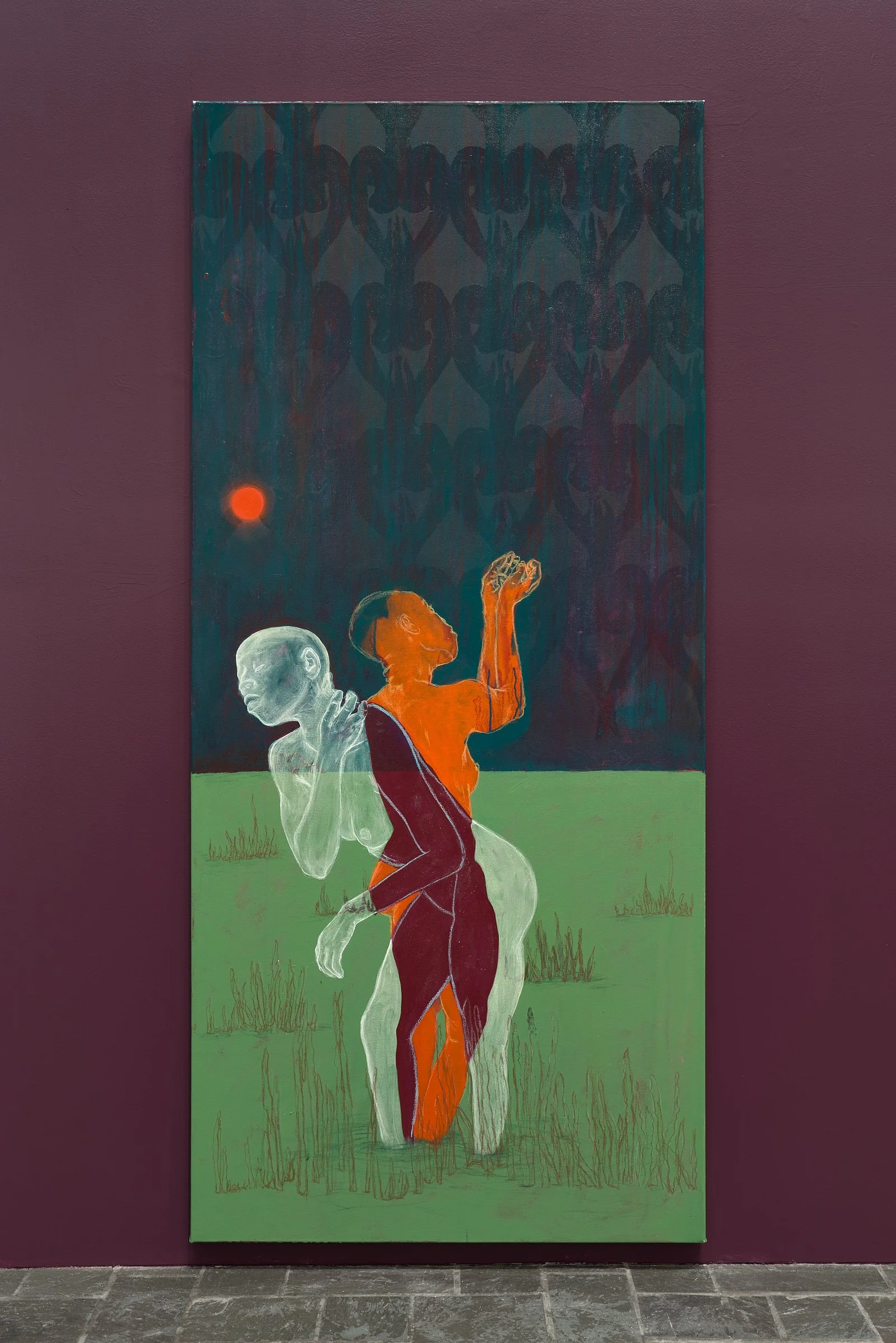
How we pale ourselves into gentler ghosts (2026)
Acrylic, conte crayon, and pencil on canvas
36 x 80 inches
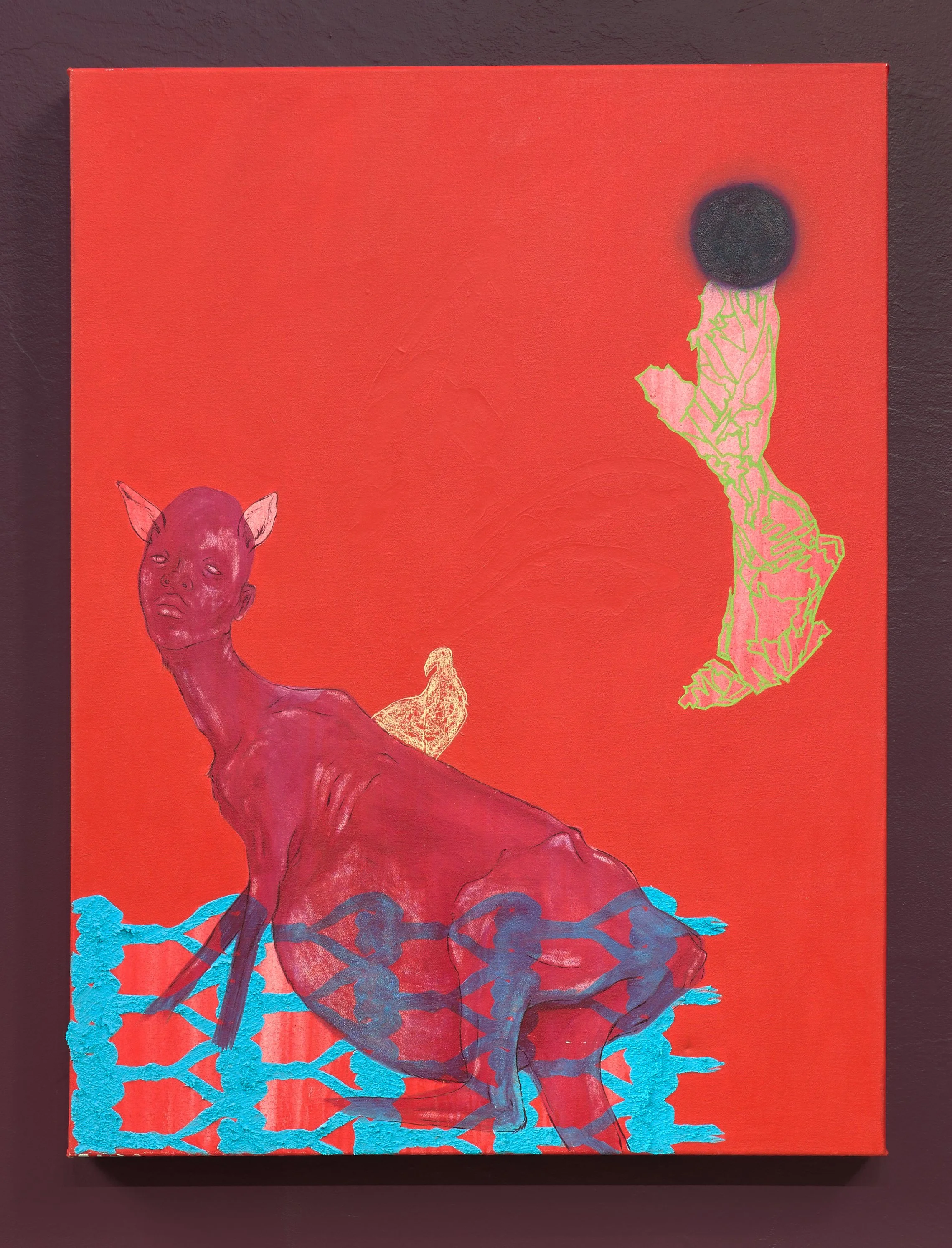
The Fawn of Guanima (First Encounter) (2026)
Acrylic, conte crayon, soft pastel, and sand from Paradise Island, Bahamas on canvas
31 x 42 inches
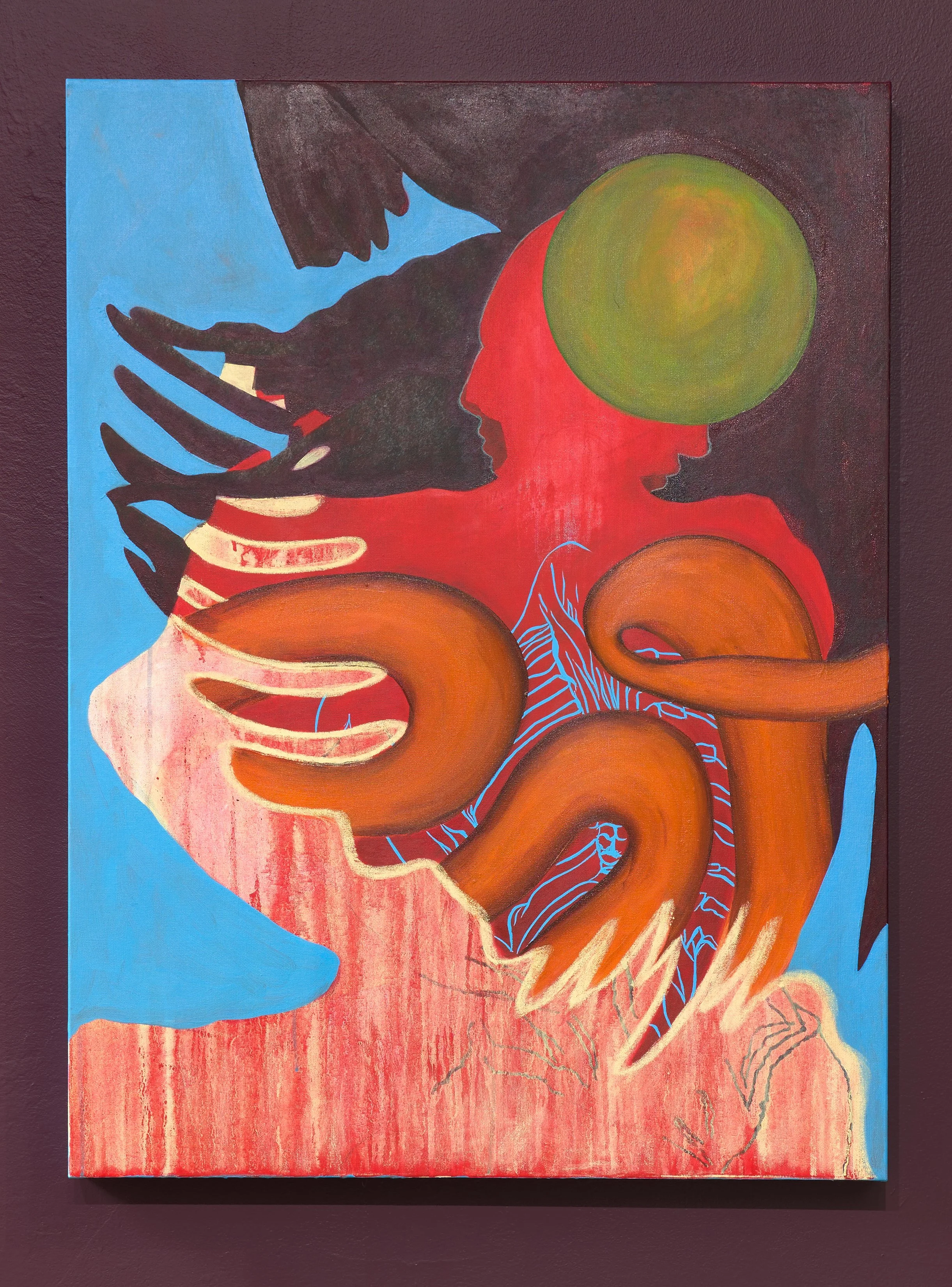
It syphons; It shields (2026)
Acrylic, conte crayon, pastel, acrylic gouache, and archival image transfer on canvas
30 x 40 inches
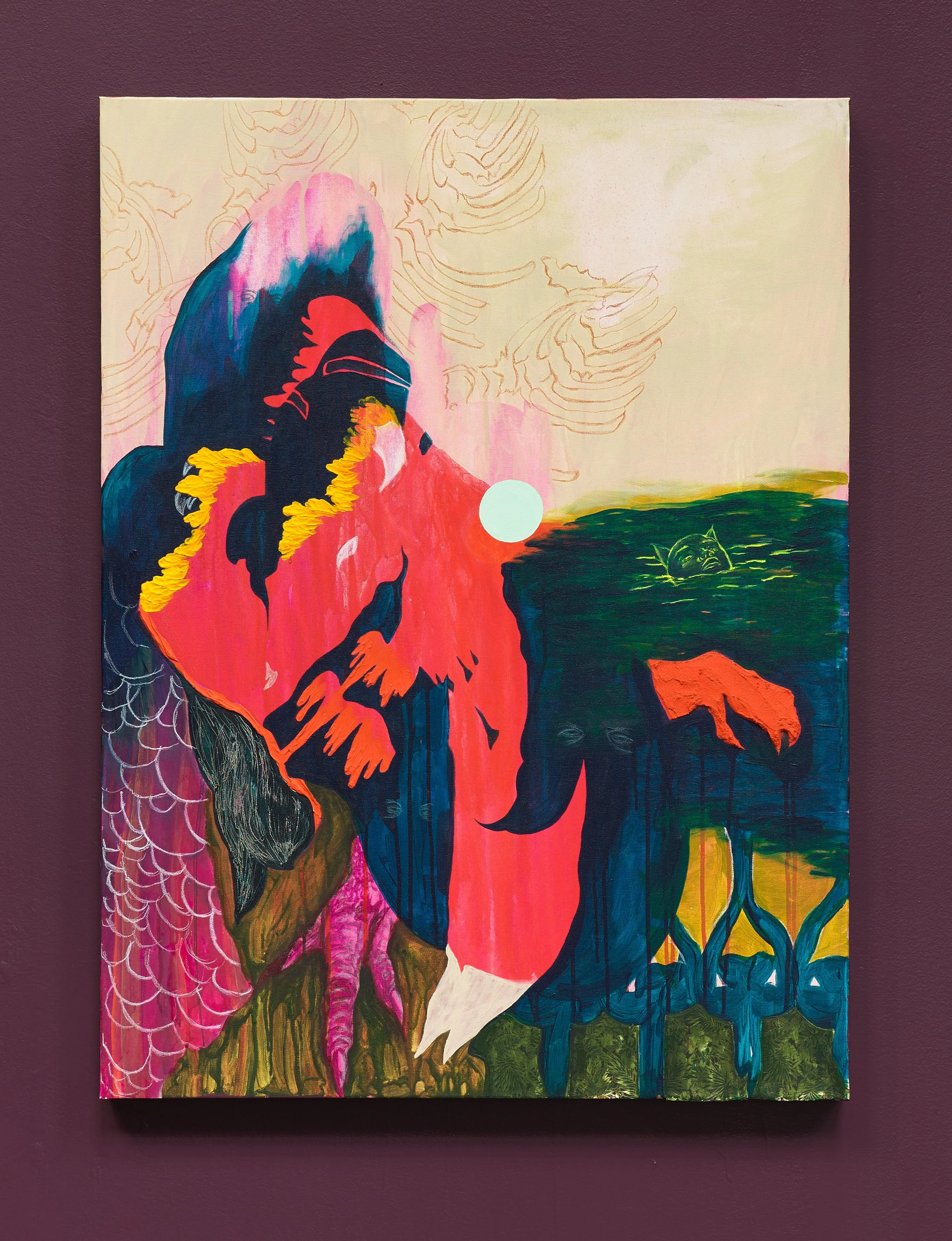
It cuts around the edges (2026)
Acrylic, conte crayon, pencil, decorative paper, acrylic gouache, and sand from Paradise Island, Bahamas, on canvas
30 x 40 inches
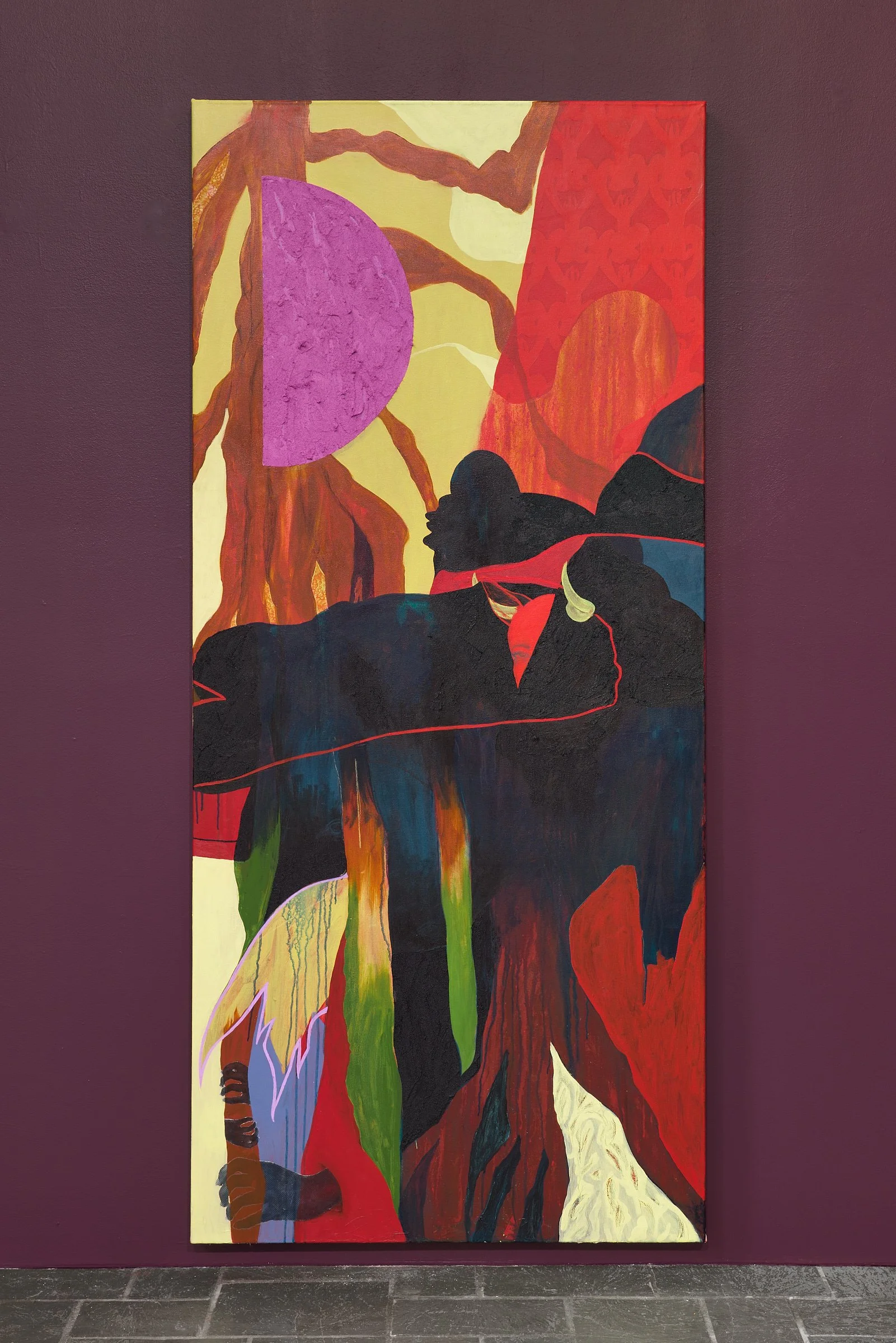
Something Else; Something More (2026)
Acrylic, conte crayons, colored pencil, sawdust, archival image transfer, and sand from Paradise Island, Bahamas, on Canvas
36 x 80 inches